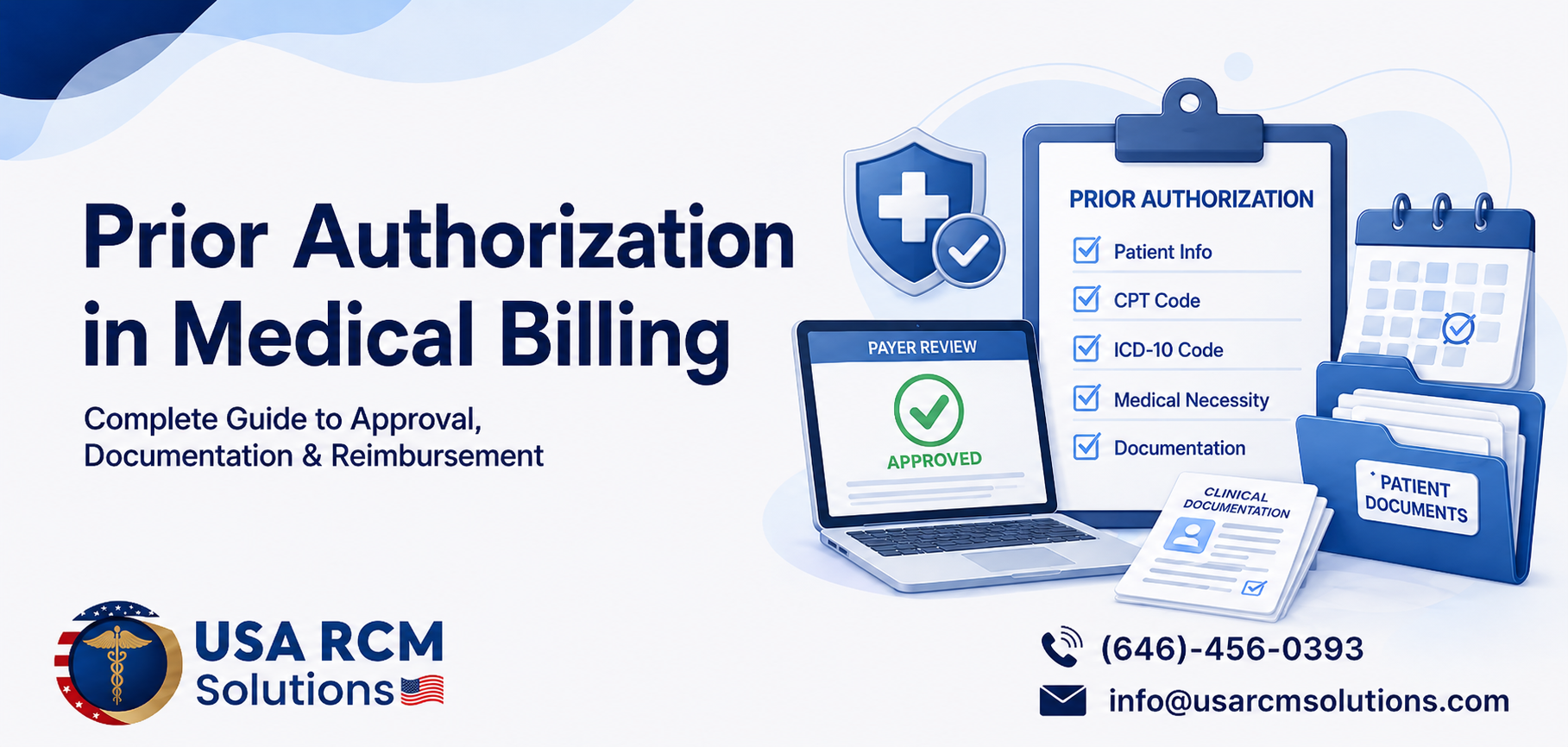
Prior authorization in medical billing means getting approval from an insurance payer before a provider performs certain services, procedures, medications, or supplies. It helps the payer confirm coverage, medical necessity, and plan rules before the claim is submitted.
For providers, prior authorization is not just an administrative step. It directly affects clean claims, reimbursement, denial prevention, and patient care timelines. A missed or incorrect authorization can lead to claim denials, payment delays, or unexpected patient bills.
That is why billing teams must verify benefits, check payer rules, use correct CPT and ICD-10 codes, and submit complete documentation before the service is billed. This guide explains how prior authorization works, who handles it, why payers require it, and how billing teams can make the process smoother.
How Does Prior Authorization Work?
Prior authorization works as a payer review before certain healthcare services are approved or billed. The process usually starts before the patient receives the service. The billing team checks whether the patient’s insurance plan requires approval for that service.
If authorization is required, the team collects the needed information and submits it to the payer. The payer then reviews the request and may approve it, deny it, or ask for more documents.
Who Is Responsible for Prior Authorization?
Prior authorization is usually a shared responsibility. The provider orders the service and explains why it is medically necessary. The clinical team provides notes, test results, and treatment history when needed.
The front desk or scheduling team may check eligibility before the visit or procedure. The medical billing or RCM team usually manages the main authorization process, including payer rule checks, submission, follow-up, and system updates.
The insurance payer reviews the request and decides whether to approve, deny, or ask for more information. In most practices, the billing team plays the biggest role in preventing authorization-related denials.
Why Do Insurance Companies Require Prior Authorization?
Insurance companies require prior authorization to review certain services before they are provided. The goal is to confirm that the service is covered, medically necessary, and supported by the patient’s condition.
For medical billing teams, this step matters because payer approval can affect whether the claim moves smoothly or gets denied later. Prior authorization helps reduce billing errors, but only when the request is submitted with correct codes and complete documentation.
Medical Necessity and Cost Control
Medical necessity is one of the main reasons payers require prior authorization. The payer wants to know whether the requested service is reasonable and needed based on the patient’s diagnosis, symptoms, history, and treatment plan.
Prior authorization is also used for cost control. Many payers review high-cost procedures, advanced imaging, specialty medications, and durable medical equipment before approving coverage. This allows them to check whether the service fits their policy rules.
For providers, the key is strong documentation. Clinical notes, test results, previous treatment records, and the correct ICD-10 code should clearly support why the service is needed. Weak or missing documentation can delay approval or cause denial.
How Prior Authorization Affects Reimbursement
Prior authorization has a direct impact on reimbursement. If a service requires approval and the provider does not get it before treatment, the claim may be denied even if the service was medically necessary.
Billing teams must also make sure the approved authorization matches the claim. The CPT code, ICD-10 code, provider, location, date range, and approved units should be checked before submission. A mismatch can create payment delays or denials.
A strong authorization process helps practices submit cleaner claims, reduce rework, and improve cash flow. It also protects patients from surprise billing issues when coverage is not confirmed before care.
What Services Typically Require Prior Authorization?
Many healthcare services need prior authorization because they are high-cost, complex, or require medical necessity review. The exact rules depend on the insurance payer, patient plan, provider contract, and service type.
For billing teams, the safest approach is to check payer requirements before the service date. This helps avoid missed approvals, claim denials, and delayed reimbursement.
Common Services That Need Prior Authorization
Services that often require prior authorization include advanced imaging, surgeries, specialty medications, durable medical equipment, and some therapy services. These services usually need stronger documentation because payers want proof that the treatment is medically necessary.
The billing team should confirm the required CPT codes, ICD-10 codes, number of visits or units, and authorization validity period before submitting the request.
| Service Type | Common Examples | Billing Focus |
|---|---|---|
| Advanced imaging | MRI, CT scan, PET scan | Match CPT and ICD-10 codes correctly |
| Surgery | Elective or outpatient procedures | Confirm medical necessity and payer rules |
| Specialty medications | Biologics, injectables, high-cost drugs | Attach treatment history and clinical notes |
| Durable medical equipment | Wheelchairs, oxygen, braces | Submit physician order and diagnosis support |
| Therapy services | Physical therapy, behavioral health | Track approved visits and expiration dates |
| Home health services | Skilled nursing, home therapy | Confirm coverage limits and care plan |
Even when a service is covered, the payer may still require approval before it is performed. That is why prior authorization should be handled before claim submission, not after the denial arrives.
A simple payer check can prevent common issues like no authorization on file, expired authorization, wrong CPT code, or missing documentation.
How to Submit a Prior Authorization Request
Submitting a prior authorization request requires accuracy from the start. The billing team must collect patient, provider, insurance, coding, and clinical details before sending anything to the payer.
A weak request can delay approval, even when the service is medically necessary. That is why CPT codes, ICD-10 codes, and documentation must match the payer’s policy before submission.
Information Needed Before Submission
Before submitting the request, the billing team should verify patient eligibility and benefits. This confirms whether the patient’s plan is active and whether the requested service needs prior authorization.
The team should also confirm the correct CPT code, ICD-10 code, and HCPCS code if applicable. These codes tell the payer what service is being requested and why it is medically necessary.
Most prior authorization requests include:
- Patient name, date of birth, and insurance ID
- Provider NPI, tax ID, and contact details
- Diagnosis code and procedure code
- Date of service or expected treatment date
- Place of service or facility details
- Clinical notes and test results
- Physician order or treatment plan
- Previous treatment history if required
Complete documentation improves the chance of faster approval. Missing clinical notes, unclear diagnosis support, or incorrect coding can lead to delays, payer questions, or denial.
How to Check Prior Authorization Status
Checking prior authorization status is just as important as submitting the request. A request may stay pending, need more documents, or get denied without quick follow-up.
Billing teams should track every request until the payer gives a final decision. This helps avoid missed updates, expired approvals, and delayed claim submission.
Tracking Authorization Requests
The billing team can check prior authorization status through the payer portal, phone call, fax confirmation, or electronic authorization system. The method depends on how the original request was submitted.
Each request should be tracked with the patient name, payer, requested service, CPT code, submission date, reference number, and expected response date. This makes follow-up easier and keeps the billing workflow organized.
A good tracking sheet should include:
- Patient name and insurance plan
- Date the request was submitted
- CPT and ICD-10 codes used
- Payer reference number
- Current status
- Missing documents, if any
- Approval or denial date
- Authorization number
- Expiration date and approved units
If the payer asks for more information, the team should respond quickly. Delayed responses can push back treatment dates and slow reimbursement.
How Long Does Prior Authorization Take?
Prior authorization timelines vary by insurance payer, service type, urgency, and documentation quality. Some requests are approved quickly, while others take several business days or longer.
Standard vs Urgent Authorization Requests
A standard prior authorization request is used when the service is planned and not medically urgent. These requests usually take longer because the payer reviews coverage, medical necessity, and supporting documents.
An urgent authorization request is used when waiting could affect the patient’s health or delay needed care. These requests are usually reviewed faster, but the provider must clearly explain why the case is urgent.
How Long Are Prior Authorizations Good For?
Prior authorizations are valid only for a specific time, service, provider, location, and number of approved visits or units. The validity period depends on the payer and the type of service approved.
Some authorizations may be valid for a few days, while others may last weeks or months. For therapy, home health, or ongoing treatments, the payer may approve a limited number of visits within a set date range.
The billing team should always record the authorization number, start date, end date, approved units, and service limits. These details should be checked before the claim is submitted.
If the authorization expires before the service is provided, the claim may be denied. If more visits or units are needed, the provider may need a new request or an extension before care continues.
Does Prior Authorization Guarantee Coverage?
Prior authorization approval does not always guarantee final claim payment. It only means the payer reviewed the request and gave approval based on the information submitted before the service.
Final reimbursement still depends on claim accuracy, patient eligibility, coverage rules, coding, documentation, and payer policy at the time of billing.
Difference Between Prior Authorization and Precertification
Prior authorization usually means the payer must approve a service, medication, procedure, or equipment before it is provided. It is common for advanced imaging, surgeries, specialty drugs, durable medical equipment, and some therapy services.
Precertification is often used for hospital admissions, inpatient stays, surgeries, or higher-level services. It may focus more on confirming that the planned service meets the payer’s medical necessity and coverage rules.
Common Reasons for Prior Authorization Denials
Prior authorization denials often happen when the payer does not receive enough information to support the request. The service may be necessary, but the documentation must clearly prove why the patient needs it.
| Denial Reason | What It Means | How to Prevent It |
|---|---|---|
| Missing documentation | Clinical records were incomplete | Attach notes, test results, and treatment history |
| Wrong CPT code | Procedure code does not match the service | Verify CPT before submission |
| Incorrect ICD-10 code | Diagnosis does not support medical necessity | Match diagnosis with treatment plan |
| Lack of medical necessity | Payer does not see enough clinical support | Add stronger provider notes and test results |
| Expired authorization | Approval date range ended | Track start and end dates carefully |
| No authorization on file | Payer did not receive or locate the request | Save confirmation and reference numbers |
The best way to prevent these issues is to review payer rules before submission. A simple checklist can save the practice from repeated follow-ups and delayed reimbursement.
Steps to Appeal a Denied Authorization
The first step is to read the denial notice carefully. The billing team should identify the exact denial reason, deadline, required documents, and appeal submission method.
Next, the team should correct any coding or documentation issues. This may include updating CPT codes, adding more specific ICD-10 codes, attaching clinical notes, or requesting a letter of medical necessity from the provider.
After the appeal is prepared, it should be submitted through the payer’s required channel. This may be a payer portal, fax, mail, or phone-based process. The team should save proof of submission and track the appeal until a decision is received.
A strong appeal should include the denial letter, corrected request form, supporting records, medical necessity statement, and any payer-required forms. Clear documentation gives the payer fewer reasons to delay or deny the request again.
How USA RCM Solutions Helps With Prior Authorization
USA RCM Solutions helps healthcare providers manage prior authorization with a clean and organized billing workflow. The focus is on accurate coding, complete documentation, timely follow-up, and fewer authorization-related denials.
A strong prior authorization process protects revenue before the claim is even submitted. When every request is checked carefully, providers can reduce payment delays and improve the overall revenue cycle.
USA RCM Solutions focuses on coding accuracy from the start. The team checks CPT codes, ICD-10 codes, HCPCS codes, payer rules, and required documentation before submitting the authorization request.
If a prior authorization is denied, the prior authorizations specialists team reviews the denial reason and helps correct the issue. This may include adding documentation, fixing coding errors, updating clinical support, or preparing the appeal.
Conclusion
Prior authorization in medical billing plays a major role in coding accuracy, clean claims, denial prevention, and timely reimbursement. When providers verify eligibility, check payer rules, use correct CPT and ICD-10 codes, and submit complete documentation, the approval process becomes smoother. A strong prior authorization workflow helps reduce avoidable denials, protects revenue, and gives patients a clearer billing experience before care is delivered.