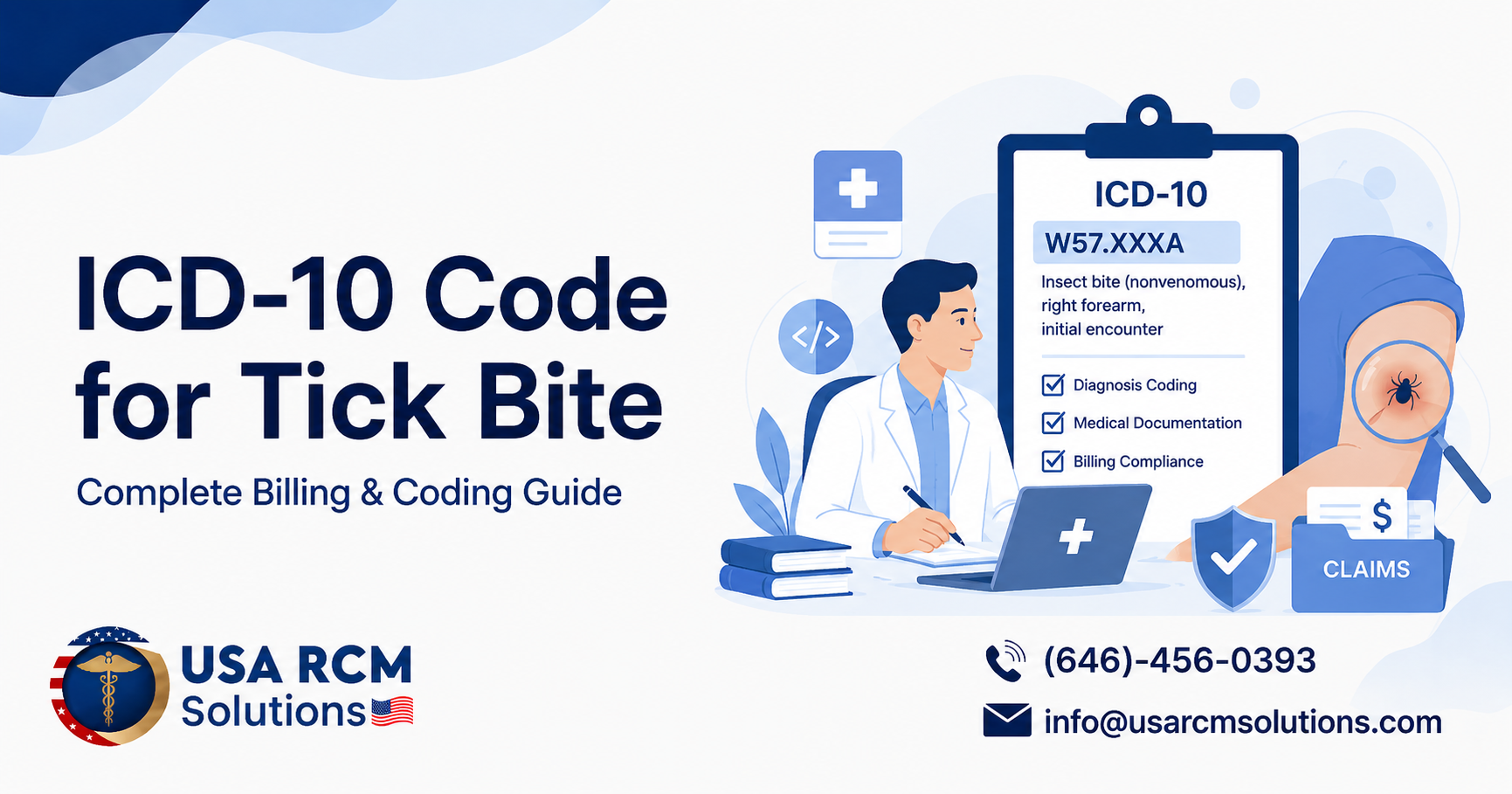
There is no single ICD-10 code for tick bite, and that’s where most coding errors begin. The primary external cause code associated with a tick bite is W57.XXXA, but it does not describe the injury location and should not be used alone.
Instead, accurate reporting requires a combination of codes, including a site-specific injury code based on the documented body area. For example, a tick bite on the right upper arm is coded with S40.861A + W57.XXXA for complete reporting. Additional codes may be required if complications such as infection or Lyme disease are documented. Getting the correct code combination ensures accurate claims, proper reimbursement, and fewer coding errors.
Primary ICD-10 Code for Tick Bite
W57.XXXA – Bitten or Stung by Nonvenomous Insect
The W57.XXXA ICD-10 code is used to identify the external cause of a tick bite.
It does not describe the injury itself, only how it happened, so it should never be used alone.
Site-Specific Injury Codes (By Body Location)
To complete the diagnosis, you must assign a site-specific injury code based on where the bite occurred.
These codes come from the S00–S90 injury category and reflect the exact anatomical location.
Examples of Common Tick Bite ICD-10 Codes
- S40.861A – Insect bite (nonvenomous) of right upper arm, initial encounter
- S80.861A – Insect bite (nonvenomous) of right lower leg, initial encounter
- S30.861A – Insect bite (nonvenomous) of abdomen, initial encounter
- S00.86XA – Insect bite (nonvenomous) of other part of head
Each of these should be reported with W57.XXXA to fully explain the cause of injury.
How to Code a Tick Bite Correctly in ICD-10
Accurate tick bite coding is not complicated, but it does require following a clear process. Missing even one step can lead to claim issues or delays in reimbursement.
Step-by-Step Coding Process
Start with the injury code based on the documented site of the bite. This is your primary diagnosis.
Next, add W57.XXXA to show the external cause.
Finally, assign the correct 7th character based on the encounter type.
Initial, Subsequent, and Sequela Encounters (7th Character)
ICD-10 requires you to specify the stage of care. This is done through the 7th character.
| 7th Character | Meaning | When to Use |
|---|---|---|
| A | Initial Encounter | First visit where patient is receiving active treatment |
| D | Subsequent Encounter | Follow-up visits after initial treatment is completed |
| S | Sequela | Used for complications or long-term effects of the bite |
When to Use Multiple Codes
Tick bite cases often require more than one code.
You may need to report the injury, the external cause, and any associated condition such as infection or Lyme disease.
ICD-10 Coding Guidelines for Tick Bites
Following standard ICD-10 guidelines ensures your coding stays compliant and audit-ready. These rules also help reduce denials and improve claim acceptance rates.
Importance of External Cause Codes
External cause codes like W57.XXXA provide context. They explain how the injury occurred, which supports claim accuracy.
Coding Specificity and Accuracy
Always code to the highest level of specificity. Avoid vague or unspecified codes when documentation clearly mentions a body part.
Common ICD-10 Coding Rules to Follow
- Always pair injury + external cause
- Use correct laterality
- Apply the correct 7th character
- Do not code undocumented conditions
Documentation Requirements for Tick Bite Coding
Strong documentation is the backbone of accurate coding. Without it, even the correct codes can lead to denials or audits.
Required Clinical Details for Accurate Coding
Providers should clearly document:
- Exact location of the bite
- Signs such as redness or swelling
- Any tick removal performed
- Presence of infection
Importance of Anatomical Location Documentation
Without a clear location, coders may be forced to use unspecified codes, which weakens the claim.
Common Documentation Mistakes
- Missing body site
- No encounter type
- Incomplete notes
- Ignoring associated conditions
Tick Bite Complications and Related ICD-10 Codes
Tick bites may seem minor, but complications can change the coding entirely. Identifying and coding these conditions correctly is essential.
Lyme Disease ICD-10 Coding
If Lyme disease is confirmed, use A69.20 along with the tick bite codes.
Other Tick-Borne Diseases
Some cases may involve additional infections depending on clinical findings. These must be coded separately.
Secondary Infections and Skin Conditions
If the bite leads to complications like cellulitis, assign an additional code based on the condition.
| Condition | ICD-10 Code |
|---|---|
| Cellulitis | L03.90 |
| Local Infection | L08.9 |
| Lyme Disease | A69.20 |
Common ICD-10 Coding Mistakes for Tick Bites
Even experienced coders can make small mistakes that impact claims. Knowing these errors helps avoid unnecessary denials.
Missing External Cause Code
Not adding W57.XXXA can make the claim incomplete.
Incorrect Site-Specific Coding
Using the wrong location code affects accuracy and reimbursement.
Incomplete Documentation Issues
Poor documentation often leads to coding gaps and rejected claims.
Real-World Coding Examples for ICD-10 Code for Tick Bite
Practical examples make it easier to understand how coding works in real scenarios. These examples reflect common cases seen in clinical practice.
Example 1: Tick Bite on Arm (Initial Encounter)
- S40.861A
- W57.XXXA
Example 2: Tick Bite with Infection
- S80.861A
- L03.90
- W57.XXXA
Example 3: Tick Bite with Lyme Disease
- S30.861A
- A69.20
- W57.XXXA
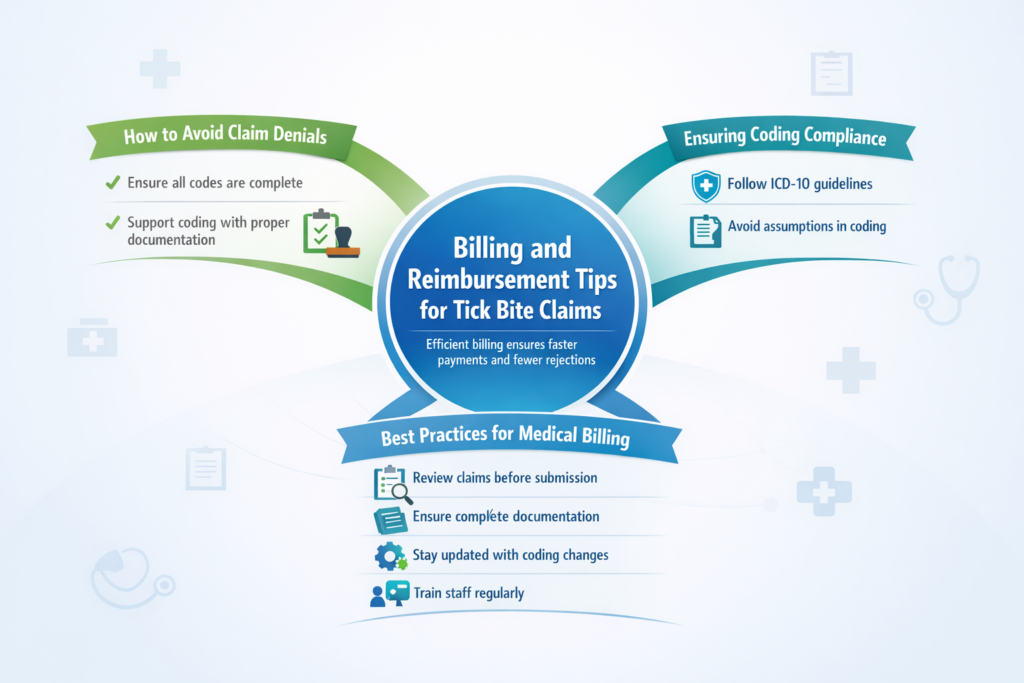
Billing and Reimbursement Tips ICD-10 Code for Tick Bite Claims
Efficient billing ensures faster payments and fewer rejections. A few best practices can make a big difference in claim success rates.
ICD-10 Code for Tick Bite Examples by Body Location and Condition
| Tick Bite Scenario | ICD-10 Code |
|---|---|
| Tick bite external cause code | W57.XXXA |
| Tick bite of right upper arm | S40.861A + W57.XXXA |
| Tick bite of right lower leg | S80.861A + W57.XXXA |
| Tick bite of abdomen | S30.861A + W57.XXXA |
| Tick bite with Lyme disease | A69.20 + Injury Code + W57.XXXA |
How USA RCM Solutions Supports Accurate ICD-10 Code for Tick Bite Coding and Billing
USA RCM Solutions is a full-service medical billing and RCM company supporting providers across the US with reliable, end-to-end revenue cycle management. With a strong focus on coding accuracy, clean claim submission, and faster reimbursements, we help practices maintain consistent financial performance.
Our certified coding team ensures correct ICD-10 code selection, proper code pairing, and complete documentation review before claim submission. We actively monitor denials, resolve issues quickly, and identify coding gaps early so providers can avoid revenue loss and stay compliant.
Conclusion
Tick bite coding is not about a single code. It requires the right combination of injury location and external cause.
Accurate documentation, correct code pairing, and attention to detail help ensure smooth billing, faster payments, and fewer denials.
FAQs
What is the ICD-10 code for tick bite without a rash?
A tick bite without a rash is typically coded based on the documented injury location along with the external cause code W57.XXXA. The correct code depends on the body site and provider documentation.
Is a tick bite considered an insect bite in ICD-10 coding?
Yes, ICD-10-CM classifies tick bites under nonvenomous insect bites. The specific injury code identifies the location, while W57.XXXA identifies the external cause.
What ICD-10 code is used for tick removal?
There is no single ICD-10 code specifically for tick removal. Coding depends on the documented service, encounter details, and whether additional treatment or diagnosis is provided.
Do you code a tick bite if the tick is removed before the patient visit?
Yes, a tick bite may still be coded if the provider documents the condition and reason for evaluation. The appropriate injury and external cause codes depend on the clinical documentation.